
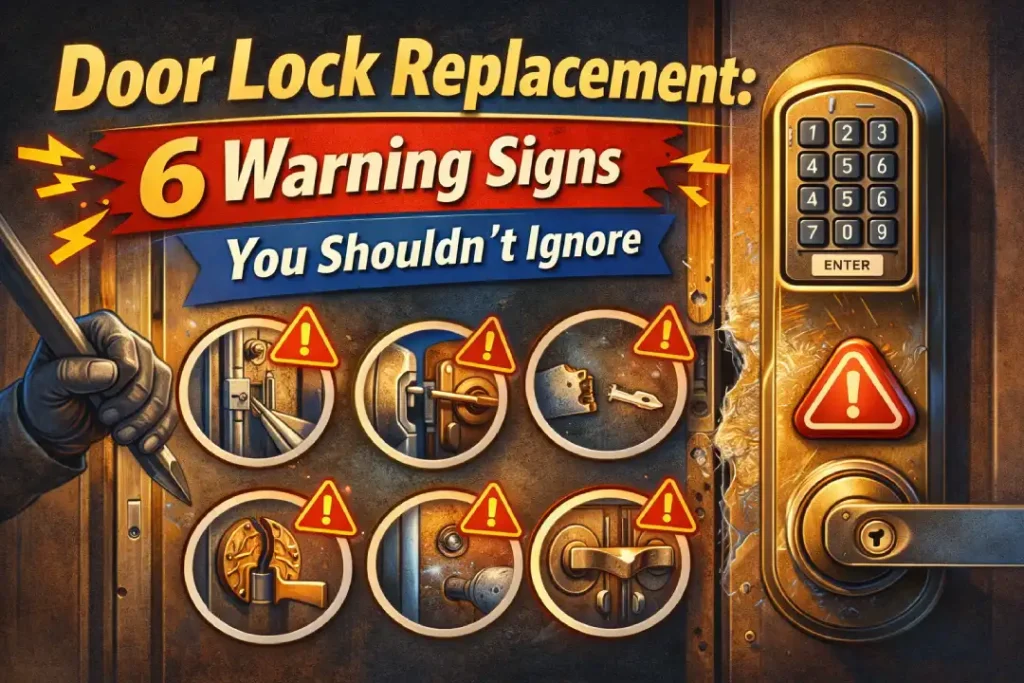
A door lock is one of the first lines of defense for any home in Singapore, yet many homeowners ignore early warning signs until they face a lockout, forced entry, or complete lock failure. A faulty lock does not always fail suddenly; in most cases, it gives clear signals long before it becomes a serious security risk. This guide explains the six most important warning signs that indicate door lock replacement is needed, helping you avoid safety issues, unexpected costs, and stressful situations that could have been prevented with timely action.
Door lock problems often start small but worsen quickly if ignored. Jamming, loose fittings, key resistance, and outdated lock designs all signal reduced security. Repair works only for minor alignment issues, while internal damage usually requires full door lock replacement. Lost keys and old locks pose immediate safety risks, especially in HDB flats and rental homes. Replacing a lock early is usually cheaper and safer than waiting for a failure or break-in.
Why Door Lock Problems Should Never Be Ignored
Ignoring door lock issues can put your home and family at risk. A lock that feels slightly stiff or loose today can fail completely tomorrow, leaving your door unsecured or impossible to open. In Singapore, where many homes share corridors or common access areas, a weak lock makes forced entry easier and reduces overall home safety.
Insurance claims may also be affected if a break-in occurs due to a known faulty lock that was not addressed.
Many homeowners delay lock replacement because the door still “works.” However, internal components wear down over time, even if the lock appears functional. Weather exposure, daily use, and poor installation all contribute to gradual damage. Addressing these problems early prevents emergency situations and costly after-hours repairs.
Door Lock Replacement: 6 Warning Signs You Shouldn’t Ignore

Your Door Lock Frequently Jams or Sticks
A door lock that jams or sticks during use is a clear sign of internal wear. This issue often starts with occasional resistance but becomes more frequent over time. While some homeowners attempt to fix this by applying lubricant, this only masks the problem temporarily. Inside the lock, pins and springs may be worn or misaligned, causing uneven movement.
In Singapore homes, humidity and frequent use speed up this wear. If the lock jams more than once a week, replacement is usually safer than repeated short-term fixes. A jammed lock can trap occupants inside or prevent access during emergencies.
The Key Is Hard to Turn or Gets Stuck
When a key becomes difficult to turn or gets stuck, it often points to damage inside the lock cylinder. This problem is not always caused by the key itself. In many cases, the cylinder has worn grooves or internal obstructions. Continuing to force the key increases the risk of it snapping inside the lock. A broken key inside the lock often leads to urgent replacement, higher costs, and door damage. If resistance increases over time, it is a strong sign that door lock replacement should be planned before the lock fails completely.
The Door Does Not Latch or Lock Properly
If your door does not latch securely or requires extra force to lock, the issue may go beyond alignment. While misalignment can sometimes be adjusted, repeated failure to latch often means the locking mechanism is worn.
This creates a serious security gap, as the door may appear closed but can be pushed open easily. This problem is common in older HDB flats and wooden doors that shift over time. If adjustments no longer solve the issue, replacing the lock ensures the door secures properly every time.
The Lock Is Loose, Wobbly, or Shifts When Used
A loose or wobbly lock is more than an annoyance. It signals weakening internal parts or damaged door fittings. Tightening screws may help briefly, but the underlying structure often continues to degrade. Over time, this can cause the lock to detach or fail under pressure. Loose locks are easier to force open, making them a security risk. Replacing the lock restores proper stability and ensures the door can withstand regular use and external force.
Your Keys Are Lost, Stolen, or Copied
Lost or stolen keys create immediate security concerns. Even if the lock works perfectly, you cannot know who may have access. In Singapore, this is especially important for rental homes, households with helpers, or homes that recently had renovation work done. While rekeying is sometimes an option, full door lock replacement is safer if there is uncertainty about copied keys or past access. A new lock ensures complete control over who can enter your home. Lost keys are a major vulnerability; the Singapore Police Force (SPF) advises homeowners to secure all entry points and replace locks immediately if keys are compromised.
The Lock Is Old, Outdated, or No Longer Secure
Older locks lack modern security features and are easier to bypass. Mechanical locks typically have a lifespan of several years, depending on usage and quality. If your lock is visibly worn, outdated, or does not meet current security expectations, replacement improves safety and peace of mind. Many Singapore homeowners choose to upgrade during renovations or after moving into a new home. Modern locks offer better durability and smoother operation, reducing long-term issues.
Choosing Professional Help for Door Lock Replacement
Door lock replacement should be done correctly to ensure long-term security. Improper installation can cause new locks to fail prematurely or damage the door. Working with a trusted service such as PS Handyman Singapore ensures proper fitting, clear pricing, and reliable workmanship. Professional installation also helps homeowners choose the right lock type based on door material and usage needs.
Common Door Lock Problems That Signal Replacement
Door locks often show multiple symptoms before they stop working completely. These problems may appear minor at first, but together they indicate that the lock is nearing the end of its usable life. One common issue is a lock cylinder that keeps turning without engaging properly. This usually means internal parts are worn or cracked, which reduces the lock’s ability to secure the door. Another frequent problem is a slow or delayed handle response, where the handle feels heavy or does not return smoothly after use. This points to spring failure inside the lock body. A heavy or unresponsive handle is a sign of internal spring failure.
Keys that work only at certain angles are another warning sign. Homeowners often assume the key is worn, but in many cases, the internal pins inside the lock are unevenly worn. Weather-related expansion and contraction can also expose weak locks, especially during rainy periods in Singapore. If lock problems appear repeatedly even after small fixes, replacement is the safer long-term option.
Lock Repair vs Door Lock Replacement: How to Decide
Deciding between repairing a lock and replacing it depends on the nature of the problem and the lock’s condition. Repairs can work for early-stage issues, but they are not suitable for every situation.
When Lock Repair Is Still Safe
Lock repair is suitable when the issue is external or minor. Examples include loose screws, minor door misalignment, or stiffness caused by dirt buildup. These issues do not usually affect the internal locking mechanism. In such cases, a simple adjustment or cleaning restores smooth operation and extends the lock’s life. However, repairs should only be considered if the lock is relatively new and has no history of repeated problems. If the same issue returns, it is a sign that deeper damage exists.
When Full Door Lock Replacement Is Necessary
Door lock replacement becomes necessary when the internal components are worn, damaged, or compromised. Issues such as frequent jamming, loose lock bodies, broken cylinders, or security concerns due to lost keys require replacement rather than repair. Continuing to repair a failing lock often leads to higher costs over time and increases the risk of sudden failure. Replacement ensures all internal parts are new and properly aligned, restoring full security and reliability.
How Often Should You Replace Door Locks?
There is no fixed timeline for door lock replacement, but most mechanical locks last between five to ten years, depending on usage and quality. Locks on main entrance doors wear out faster due to frequent use. Environmental factors such as humidity and door movement also affect lifespan. Rental homes, shared units, and properties with frequent occupant changes may require more frequent replacement to maintain security. If a lock has been repaired multiple times within a short period, replacement is usually more cost-effective than repeated fixes.
Special Situations That Require Immediate Lock Replacement
Certain situations call for immediate door lock replacement, even if the lock appears to function normally. Moving into a new home is one such case. Previous occupants, contractors, or agents may still have copies of the keys. Replacing the lock ensures full control over access.
After renovations, lock replacement is also recommended. Renovation teams often require temporary access, increasing the risk of copied keys. Following a break-in or attempted forced entry, replacement is essential to restore security. In all these situations, delaying replacement increases exposure to risk.
Mechanical Locks vs Digital Locks: When to Upgrade
Many Singapore homeowners consider upgrading from mechanical locks to digital locks during replacement. Mechanical locks are simple and affordable but rely on physical keys that can be lost or copied. Digital locks offer keyless access, audit trails, and easier access management for families and landlords.
However, digital locks require proper installation and maintenance. The decision to upgrade should consider household needs, door type, and usage patterns. A professional assessment helps determine whether a digital lock is suitable or if a high-quality mechanical lock is sufficient.
Cost of Door Lock Replacement in Singapore
The cost of door lock replacement varies based on lock type, door material, and installation complexity. Very cheap replacement services often compromise on lock quality or workmanship. This leads to repeated issues and additional expenses.
| Factor | Impact on Cost |
| Lock type | Mechanical vs digital |
| Door material | Wooden, metal, glass |
| Installation difficulty | Standard vs custom fitting |
| Urgency | After-hours or emergency jobs |
Paying for proper installation reduces long-term costs and improves security.
Why Professional Door Lock Replacement Improves Home Security
Professional lock replacement ensures the lock fits correctly and functions smoothly. Improper installation can damage doors or reduce lock lifespan. Trained technicians also help homeowners choose suitable locks based on security needs and usage.
Working with a reliable provider such as PS Handyman Singapore gives homeowners clear pricing, proper installation, and dependable after-service support. This reduces the risk of future failures and protects the home effectively.
Frequently Asked Questions About Door Lock Replacement
Can I replace a door lock myself?
Some homeowners attempt DIY door lock replacement, but this often leads to alignment issues, loose fittings, or damage to the door. Modern locks, especially main door locks in Singapore homes, require precise fitting to function correctly. Incorrect installation can shorten the lock’s lifespan and reduce security. For main entrances, professional replacement is safer and prevents repeat problems caused by improper fitting.
Is rekeying cheaper than full door lock replacement?
Rekeying is usually cheaper than full replacement, but it only works when the lock is still in good condition and security has not been compromised. If keys are lost, copied, or the lock has internal wear, rekeying does not solve the root issue. In many cases, homeowners spend more over time rekeying locks that should have been replaced earlier.
How long does door lock replacement take?
Most standard door lock replacements take less than an hour when done by a professional. Complex doors or digital lock upgrades may take slightly longer due to wiring, testing, and alignment. Proper installation time ensures the lock works smoothly and securely without future issues.
Are digital locks safer than traditional locks?
Digital locks offer better access control, especially for households with helpers, tenants, or frequent visitors. Features such as access codes and audit logs improve control. However, they must be installed correctly and maintained regularly. For some homes, a high-quality mechanical lock remains a reliable option. The best choice depends on lifestyle and usage needs.
Do I need to replace all door locks at the same time?
Replacing all locks at once is recommended when moving into a new home or after security concerns. This ensures consistent key control and avoids confusion. However, if only one lock shows serious wear, replacing that lock first is acceptable, provided other locks remain secure.
Final Checklist: Do You Need Door Lock Replacement Now?
Use this checklist to decide if replacement is necessary:
- The lock jams, sticks, or feels rough during use
- The key is difficult to turn or gets stuck
- The door does not latch or lock securely
- The lock feels loose or unstable
- Keys are lost, stolen, or possibly copied
- The lock is old or no longer secure
If two or more apply, replacement is the safest option.
Final Thoughts
Door lock problems rarely fix themselves. Most issues worsen over time and eventually lead to security risks, lockouts, or costly emergency repairs. Recognizing early warning signs allows homeowners to act before problems escalate. Timely door lock replacement protects your home, saves money, and restores peace of mind.
For reliable assessment and proper installation, working with a trusted service such as PS Handyman Singapore ensures your locks are fitted correctly and meet your home’s security needs. Professional replacement reduces future issues and helps keep your home secure