
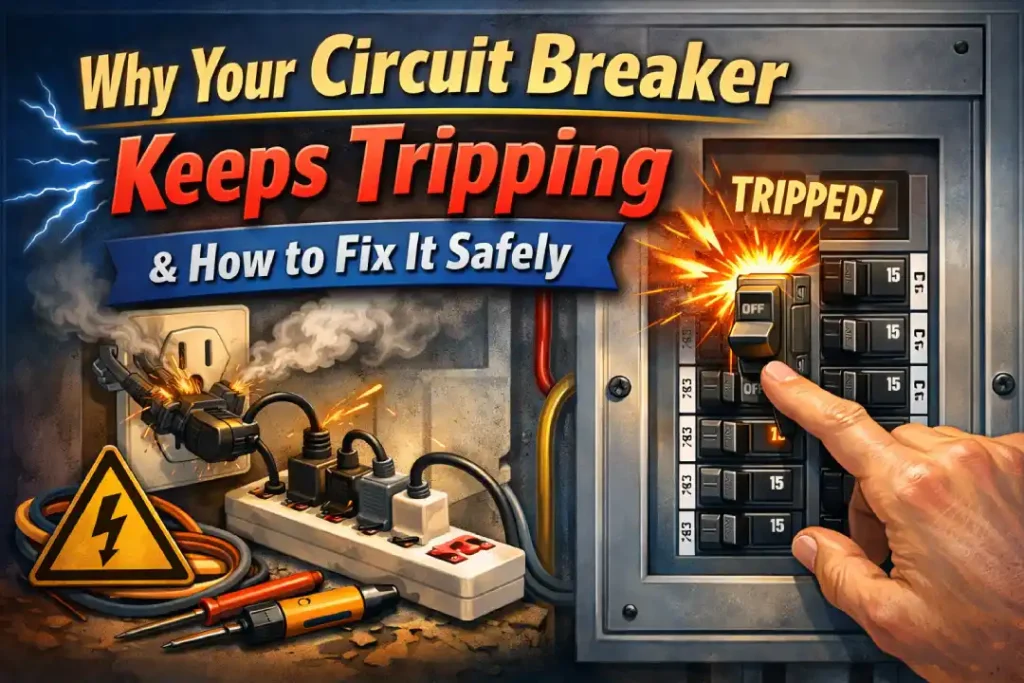
If your circuit breaker keeps tripping, it is more than a daily inconvenience. Many homeowners in Singapore face this issue and assume it is normal, especially in older flats or homes with heavy appliance use. However, a circuit breaker that keeps tripping off is your electrical system’s way of warning you that something is wrong. Ignoring it can lead to damaged appliances, sudden power loss, or serious safety risks. This guide explains why your circuit breaker keeps tripping, what it means, and what you can safely do before the problem gets worse.
Understanding Circuit Breaker Tripping in Homes
Why Circuit Breakers Trip
A circuit breaker trips to protect your home from electrical danger. It cuts off power when it detects excessive current, overheating, or faults in the system. If your circuit breaker keeps tripping repeatedly, it usually points to an overloaded circuit, faulty appliance, wiring issue, or a worn breaker. While an occasional trip can happen, frequent tripping is a sign that needs attention to avoid damage or safety hazards.
What a Circuit Breaker Does and Why It Trips
A circuit breaker is a safety device installed in your electrical panel. Its main role is to stop the flow of electricity when something abnormal occurs. When current exceeds safe levels, heat builds up inside the wires. The breaker reacts by switching off power before wires overheat or catch fire. This is why a breaker tripping is a protective action, not a fault by itself. If you are wondering why my circuit breaker tripping, the answer almost always lies in what the breaker is detecting downstream.
How to Tell If a Tripping Breaker Is a Serious Problem
Not every breaker trip signals an emergency, but repeated tripping should never be ignored. If your circuit breaker keeps tripping off shortly after being reset, trips when specific appliances are used, or trips without any clear reason, the issue is likely serious. Burning smells, warm outlets, or sparks combined with tripping indicate a higher risk. In such cases, keeping the breaker on can cause further damage or safety issues. If your breaker trips immediately after being reset, it is a sign of a deeper electrical fault; our team provides specialized power trip repair services to safely restore your home’s power.
Common Reasons Your Circuit Breaker Keeps Tripping
Circuit Overload From Too Many Appliances
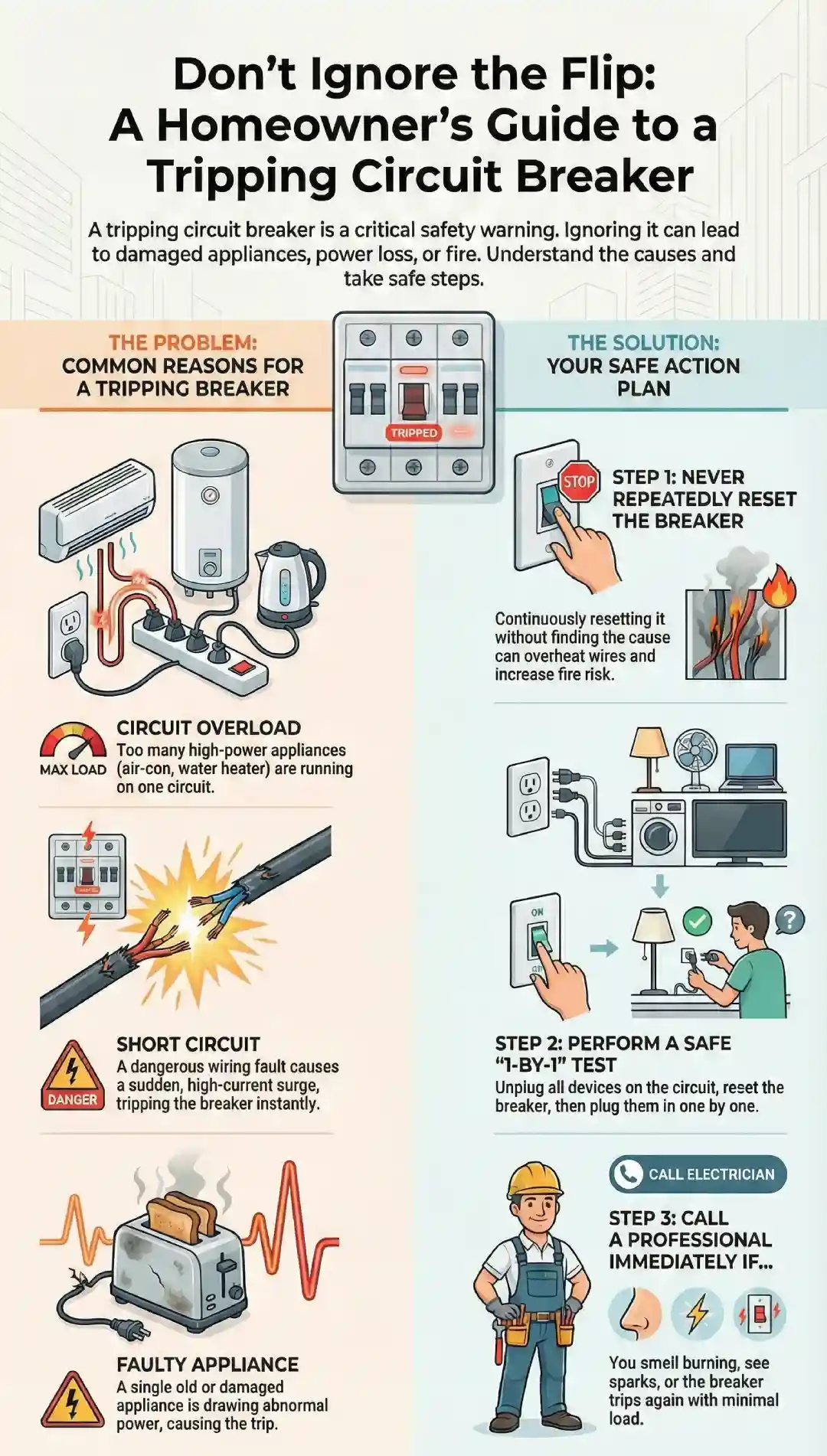
One of the most common reasons a circuit breaker trip is overload. Modern homes in Singapore use many high-power appliances such as air-conditioners, ovens, water heaters, and washing machines. When too many devices draw power from the same circuit, the breaker trips to prevent overheating. This often happens in kitchens or living rooms where multiple appliances are used at the same time. Reducing load or redistributing appliances is often the first step in solving this issue.
Short Circuits Inside Wiring or Devices
A short circuit occurs when a live wire touches a neutral wire or metal surface. This causes a sudden surge of current, forcing the breaker to trip instantly. Short circuits are dangerous because they generate intense heat. Signs include a loud pop, sparks, or a burning smell. If your circuit breaker keeps tripping after lightning or a power surge, internal wiring or appliances may have been damaged, leading to short circuits that need professional inspection.
Ground Faults and Earth Leakage Issues
Ground faults happen when electricity escapes from its normal path and flows into the ground, often through moisture or damaged insulation. In Singapore’s humid climate, this is common in bathrooms, kitchens, and outdoor areas. Ground faults cause breakers or RCDs to trip as a safety measure. If your main circuit breaker keeps tripping after rain or cleaning, moisture-related earth leakage could be the cause. Moisture in bathrooms often causes earth leakage in wall plugs; replacing damaged units with a professional power socket and switch installation can prevent these ground faults.
Faulty or Aging Electrical Appliances
Appliances can develop internal faults over time. When insulation wears out or internal components fail, the appliance may draw abnormal current, causing the breaker to trip. This often happens with older refrigerators, air-conditioners, or water heaters. If the circuit breaker keeps tripping only when one appliance is used, unplugging and testing appliances one by one can help identify the issue. An aging motor in a fan can often draw excessive current and trip the breaker; our ceiling fan repair and installation service can help resolve these appliance-specific electrical loads
Damaged, Loose, or Outdated Wiring
Wiring problems are harder to detect because they are hidden behind walls and ceilings. Loose connections, cracked insulation, or outdated wiring systems struggle to handle modern electrical loads. Over time, this leads to overheating and repeated breaker trips. Homes that have not had electrical upgrades for many years are more likely to face this issue, especially when new appliances are added.
Failing or Worn Circuit Breaker
Circuit breakers do not last forever. With repeated tripping and age, internal components can weaken. A worn breaker may trip too easily or fail to reset properly. If your breaker trips even under light load, the breaker itself may need replacement. This is common in older electrical panels.
What to Do When a Circuit Breaker Keeps Tripping
What You Should Never Do When a Breaker Keeps Tripping
When a circuit breaker keeps tripping, one of the most common mistakes homeowners make is repeatedly switching it back on without finding the cause. This puts stress on the wiring and the breaker itself, increasing heat buildup inside the electrical panel. Another unsafe action is ignoring burning smells, buzzing sounds, or warm outlets, assuming they will go away on their own. Using extension cords as a long-term fix or attempting DIY repairs inside the electrical panel is also dangerous. Electrical panels carry live current, and improper handling can result in serious injury or damage.
What You Can Safely Do Before Calling a Professional
There are a few safe steps you can take before seeking professional help. Start by unplugging all appliances connected to the affected circuit, then reset the breaker once. If it stays on, plug appliances back in one at a time to see if a specific device causes the breaker to trip. Reducing the electrical load by switching off high-power appliances can help temporarily. You should also check visible power cords and outlets for damage or moisture. If the breaker trips again with minimal load, keep it off and avoid further testing.
What to Do If the Circuit Breaker Keeps Tripping After Lightning
Lightning strikes and power surges can damage appliances, wiring, and circuit breakers even if there is no visible damage. If your circuit breaker keeps tripping after lightning, it may be reacting to surge-damaged components. In such cases, unplug sensitive appliances immediately and avoid resetting the breaker multiple times. Internal damage caused by surges is not always visible and often requires proper testing tools to identify. Early inspection helps prevent hidden faults from turning into larger electrical failures.
Why the Main Circuit Breaker Keeps Tripping
When the main circuit breaker keeps tripping, the issue usually affects the entire electrical system rather than a single circuit. This can be caused by excessive overall load, earth leakage, damaged incoming wiring, or a failing main breaker. Main breaker trips should never be ignored because they indicate system-wide stress. Homes with multiple air-conditioners, electric water heaters, or older panels are more likely to experience this issue, especially during peak usage hours.
How Professionals Diagnose Repeated Circuit Breaker Tripping
Professional diagnosis goes beyond basic checks. Technicians begin by testing circuit loads to see if they exceed safe limits. Appliances are isolated to identify faulty devices, and wiring is inspected for loose connections or insulation damage. The electrical panel and breakers are examined for heat marks, wear, or internal faults. Earth leakage and grounding systems are also tested to ensure electricity flows safely. This step-by-step process ensures the real cause is fixed rather than masked. Regular home maintenance is essential for ensuring your Singapore home remains in top condition, preventing costly repairs, and promoting a healthier living environment.
When to Call a Professional Electrical Service Without Delay
If the circuit breaker keeps tripping off even after reducing load, or if tripping is accompanied by burning smells, sparks, or shocks, professional help is essential. These signs indicate a higher safety risk that should not be handled without proper tools and training. Homeowners in Singapore can rely on experienced technicians from PS Handyman Singapore to carry out safe inspections, breaker replacement, and wiring repairs that meet local safety standards.
Is It Time for an Electrical Panel or Switchboard Upgrade?
If your circuit breaker keeps tripping even after reducing appliance load and checking for obvious faults, your electrical panel may no longer meet your home’s power demands. Many older homes in Singapore were designed for fewer appliances and lower electricity usage. Modern households often use multiple air-conditioners, water heaters, and kitchen appliances at the same time, which places strain on outdated panels. Upgrading the electrical panel or switchboard improves power distribution, reduces frequent trips, and enhances overall safety by meeting current usage needs. All repairs must comply with the EMA regulatory requirements to ensure the safety of HDB and private residential electrical systems.
How to Prevent Circuit Breaker Tripping in the Future
Preventing repeated power trips starts with better electrical planning. Appliances with high power demand should be spread across different circuits instead of relying on a single power line. Regular inspections help identify loose connections and worn wiring before they cause problems. Replacing damaged outlets, using certified electrical fittings, and avoiding overloaded power strips also reduce risk. These steps help homeowners understand why a circuit breaker keeps tripping and how to prevent the issue from returning.
Electrical Mistakes That Lead to Frequent Power Trips
Many power trip issues come from simple mistakes made over time. Using extension cords as permanent wiring, adding new appliances without upgrading circuits, and ignoring early warning signs all increase electrical stress. DIY modifications without proper testing often cause hidden faults that lead to repeated breaker trips. Avoiding these mistakes protects your electrical system and reduces the need for emergency repairs.
Why Choose PS Handyman Singapore for Electrical Issues
PS Handyman Singapore provides reliable electrical services tailored to the needs of local homes, including HDB flats, condominiums, and landed properties. The team handles circuit breaker inspections, electrical repairs, wiring checks, and panel upgrades with safety as a priority. With practical experience in Singapore homes and transparent service standards, PS Handyman Singapore helps homeowners fix electrical issues correctly the first time.
Frequently Asked Questions
Why does my circuit breaker keep tripping at night?
Breaker trips at night often occur due to air-conditioners, water heaters, or appliances running simultaneously. Increased load during evening hours can overload circuits, causing the breaker to trip as a safety measure.
Is it safe to keep resetting a circuit breaker?
Resetting a breaker once after a trip is acceptable. Repeatedly resetting it without fixing the cause can overheat wiring and increase fire risk. If the breaker keeps tripping, the issue should be inspected.
Can humidity cause a circuit breaker to trip?
Yes, humidity can lead to moisture inside outlets or wiring, causing ground faults. This is common in bathrooms, kitchens, and outdoor areas, especially in Singapore’s climate.
How do I know if an appliance is causing the power trip?
Unplug all appliances and reset the breaker. Plug them back in one at a time. If the breaker trips when a specific appliance is connected, that appliance likely has an internal fault.
When should I replace my circuit breaker?
Circuit breakers may need replacement if they trip under light load, fail to reset, or show signs of heat damage. Older breakers are more prone to failure and should be checked during inspections.
Final Thoughts: Breaker Tripping Is a Safety Warning
A circuit breaker that keeps tripping is your home’s way of preventing electrical danger. Treating it as a warning rather than a nuisance protects your family, appliances, and property. Early inspection and proper repairs reduce long-term costs and improve safety. For trusted electrical inspection, repair, or upgrade services in Singapore, professional support PS Handyman Singapore is available.