
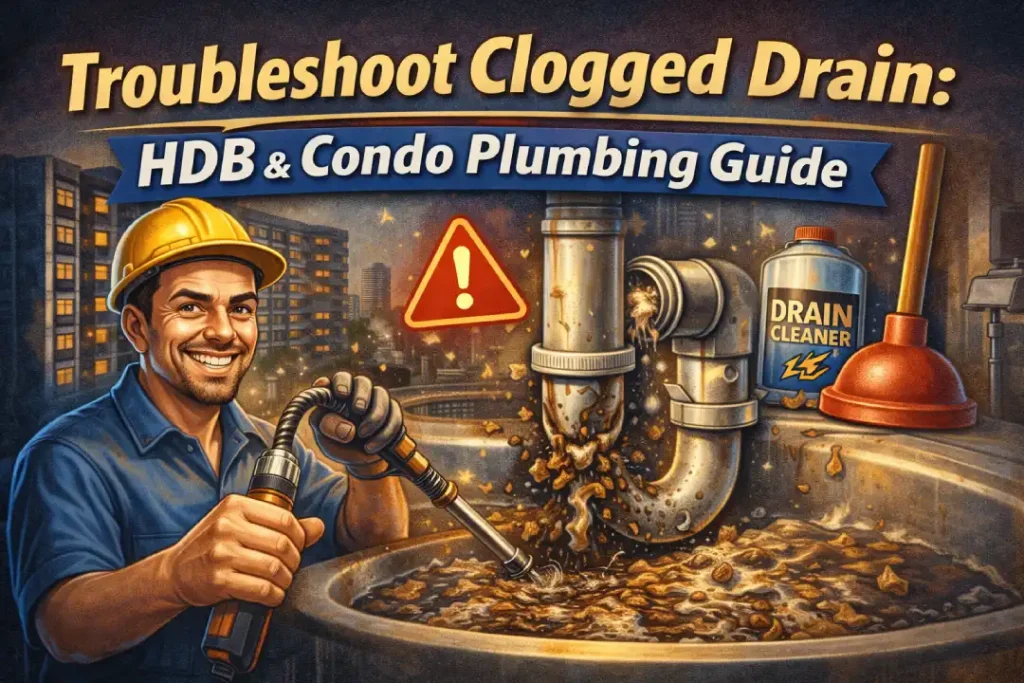
A clogged drain is one of the most frequent household plumbing problems in Singapore, yet it is often ignored until it becomes severe. Many homeowners only take action when water starts overflowing, foul smells spread, or daily activities like washing and bathing become difficult. What begins as slow drainage can quickly escalate into pipe damage, leaks, or hygiene issues if left untreated. Because Singapore homes commonly rely on floor traps and compact piping systems, drain problems can worsen faster than expected. This guide explains how to troubleshoot a clogged drain in a clear, step-by-step manner, helping you understand the cause, apply safe DIY methods, and recognise when professional help is necessary.
How Your Drain System Works
To troubleshoot a clogged drain effectively, it is important to understand how your drainage system functions. In most Singapore homes, water from sinks, showers, toilets, and appliances flows through branch pipes into a main discharge pipe. Floor traps play a critical role by trapping debris and blocking sewer gases from entering the home. Because of this design, floor traps tend to collect hair, dirt, and residue over time.
When water begins draining slowly, it indicates that debris is restricting flow somewhere along this system. Partial clogs reduce efficiency, while complete blockages force water to back up into sinks or floor traps. Identifying whether the problem is limited to one fixture or affecting multiple drains helps determine the correct solution and prevents unnecessary pipe damage. When a partial clog reduces your pipe’s efficiency, a professional drain cleaning and unclogging service can clear the line before a total blockage occurs.
Common Causes of a Clogged Drain in Singapore Homes
Drain clogs in Singapore homes usually develop from everyday habits rather than sudden accidents. Understanding the root cause allows you to choose the most effective troubleshooting method instead of relying on guesswork.
Hair and Soap Buildup
Hair and soap residue are the leading causes of bathroom drain clogs. Hair strands tangle together and mix with soap scum, forming thick, sticky blockages inside pipes. Over time, this buildup narrows the pipe and slows water flow. Floor traps are especially prone to this issue because they are designed to catch hair before it enters the main drainage line. Without regular cleaning, these blockages gradually worsen.
Grease, Oil, and Food Waste
Kitchen sink clogs commonly result from grease and cooking oil being poured down the drain. Even when flushed with hot water, grease eventually cools and hardens inside the pipes. Food particles such as rice, noodles, and coffee grounds stick to the grease, creating dense blockages. These clogs often start small but become difficult to remove once they build up along pipe walls.
Dirt, Sand, and Renovation Residue
After renovation work or heavy cleaning, fine debris such as sand, cement dust, and dirt can enter floor traps and drains. These materials settle at the bottom of pipes and reduce the internal diameter. Over time, normal household waste collects around them, leading to repeated drain choke problems. This cause is especially common in recently renovated HDB flats.
Foreign Objects and Hygiene Products
Foreign objects are a major cause of sudden and severe drain blockages. Items like wet wipes, tissues, cotton buds, sanitary products, and small toys do not break down in water. Even products marketed as “flushable” can become stuck at pipe bends or inside floor traps. Once lodged, these items trap additional debris and quickly cause full blockages.
Mineral Deposits and Pipe Aging
Older plumbing systems may develop mineral deposits along the inner walls of pipes. These deposits gradually narrow the passageway, slowing water flow and increasing the likelihood of clogs. While this process happens slowly, it makes drains more sensitive to normal waste buildup. Aging pipes in older Singapore flats are particularly vulnerable to this issue.
Early Warning Signs Your Drain Is Getting Clogged
Most clogged drains give clear warning signs before becoming fully blocked. Slow drainage is usually the first indicator and often goes unnoticed. Gurgling noises suggest trapped air caused by partial blockages within the pipe. Persistent foul smells from sinks or floor traps indicate trapped organic matter decomposing inside the drain. Water backing up into nearby drains or floor traps signals a more serious issue that requires immediate attention. Ignoring these signs allows the clog to harden and spread deeper into the system.
How To Troubleshoot Your Clogged Drain?
Following troubleshooting steps in the correct order improves success and reduces the risk of pipe damage. Skipping steps or using aggressive methods too early may worsen the problem.

Step 1 – Identify Which Drain Is Clogged
Begin by checking whether the issue affects only one drain or multiple fixtures. A single slow sink or floor trap usually indicates a local blockage that can be resolved with simple cleaning. If several drains are slow or backing up at the same time, the blockage is likely deeper in the system. This assessment helps determine whether DIY methods are appropriate or if professional help may be needed.
Step 2 – Use Boiling Water Safely
Boiling water helps dissolve light grease and soap buildup, particularly in kitchen drains. Pour the water slowly and carefully to avoid splashing or burns. This method is effective only for minor clogs and should not be overused on PVC pipes, as repeated exposure to high heat may weaken the pipe material over time.
Step 3 – Try Baking Soda and Vinegar
Baking soda and vinegar create a chemical reaction that loosens organic residue inside pipes. Pour baking soda into the drain, followed by vinegar, and allow it to react before flushing with hot water. This method works best for early-stage clogs and odour removal. It is not effective against solid objects or heavy grease buildup.
Step 4 – Use a Plunger Correctly
A plunger uses pressure to dislodge soft blockages. Ensure the plunger fully covers the drain opening and that there is enough water to create suction. For floor traps, block nearby drains to maintain pressure. Proper plunging technique often clears clogs caused by hair, food residue, or soap buildup.
Step 5 – Clean the Drain Trap Manually
Removing and cleaning the drain trap provides direct access to trapped debris. This method is especially effective for bathroom and floor trap clogs. Wear gloves and be prepared for unpleasant smells. Clearing the trap often restores normal water flow immediately and prevents recurring blockages.
Step 6 – Use a Plumbing Snake or Auger
A plumbing snake reaches deeper into the pipe to break apart or retrieve clogs. Manual snakes are suitable for moderate blockages, while electric augers handle tougher cases. Care must be taken to avoid scratching or damaging pipe interiors, especially in older plumbing systems.
Step 7 – Wet & Dry Vacuum Method
A wet and dry vacuum can remove loose debris using suction. Seal the drain opening tightly to create strong suction and set the vacuum to liquid mode. This method works well for shallow blockages caused by dirt, hair, or small debris and is safer than chemical solutions.
When DIY Drain Troubleshooting Is Not Enough
DIY methods are effective only for minor or early-stage clogs. If blockages return frequently, affect multiple drains, or produce sewage smells, professional intervention is necessary. Deep clogs often require specialised tools such as inspection cameras or high-pressure water jetting. Continuing DIY attempts in these cases may damage pipes and increase repair costs. Professional drain cleaning ensures proper diagnosis, complete removal of blockages, and long-term protection of your plumbing system.
Tools Plumbers Use to Clear Stubborn Drain Chokes
When DIY methods fail, professional plumbers rely on specialised tools to remove deep or compacted blockages safely. These tools are designed to clear drains without damaging pipes, which is especially important in older HDB flats where piping systems may already be worn. Professional equipment also allows plumbers to diagnose the exact location and cause of the clog, instead of relying on trial-and-error methods.
Electric Drain Snake
An electric drain snake is used for blockages that are too deep or solid for manual tools. It works by rotating a flexible cable through the pipe to break apart or retrieve debris such as hardened grease, hair clumps, or foreign objects. This tool is effective for long pipe runs and repeated drain chokes. Unlike DIY snakes, electric versions provide controlled power, reducing the risk of pipe damage when handled by trained technicians.
Drain Inspection Camera
A drain inspection camera allows plumbers to see inside pipes in real time. This tool is especially useful when clogs keep returning despite repeated cleaning. The camera identifies hidden plumbing issues such as pipe cracks, collapsed sections, or heavy buildup along pipe walls. By locating the exact problem area, plumbers can choose the most effective cleaning method and avoid unnecessary work.
High-Pressure Water Jetting
High-pressure water jetting uses strong water streams to clean the inner walls of pipes. This method removes grease, soap residue, and mineral deposits that cling to pipes over time. It is commonly used for kitchen drains and main discharge lines. Water jetting restores pipe flow more thoroughly than chemical cleaners and reduces the chance of future clogs.
What NOT to Do When Troubleshooting a Clogged Drain
Many drain problems worsen because of incorrect DIY attempts. One common mistake is overusing chemical drain cleaners. These products may dissolve surface buildup but often fail against solid clogs. Repeated use can weaken pipes and cause leaks, especially in older plumbing systems.
Mixing cleaning chemicals is another serious mistake. Combining products can create harmful fumes or reactions that endanger health. Forcing sharp objects or metal rods into drains can scratch or puncture pipes, leading to hidden leaks. Ignoring recurring clogs is also risky, as repeated blockages often signal deeper pipe issues that require professional attention. Improperly disposing of food waste or chemicals can lead to serious pipe damage. It is important to adhere to the PUB public advisory on maintaining used water systems, which highlights that only used water should enter our sewers to keep the city’s drainage network functioning safely.
When DIY Drain Troubleshooting Is No Longer Safe
DIY troubleshooting has limits. If water backs up into multiple drains, sewage smells appear, or clogs return within a short time, the problem is likely beyond surface-level blockage. These signs often indicate main line issues or severe buildup that cannot be cleared safely with household tools.
Water pooling around floor traps, slow drainage throughout the home, or visible water damage are clear signals to stop DIY efforts. Continuing without proper tools can lead to pipe bursts or flooding, resulting in costly repairs.
Cost of Drain Choke Clearing in Singapore
Drain clearing costs in Singapore vary based on several factors. Understanding these helps homeowners avoid surprise charges and recognise unrealistic low quotes.
| Factor | How It Affects Cost |
| Location of clog | Floor trap, sink, or main line |
| Severity | Partial vs complete blockage |
| Tools required | Manual tools vs water jetting |
| Timing | Normal hours vs emergency service |
Very cheap services often skip proper cleaning or use temporary fixes, leading to repeat clogs. Proper assessment and cleaning reduce long-term expenses.
How Professional Drain Cleaning Prevents Repeat Problems
Professional drain cleaning addresses both the blockage and its underlying cause. Instead of pushing debris further down the pipe, trained technicians remove buildup completely. This improves water flow and reduces odours. Professional plumbing services also provide advice on preventing future clogs based on your home’s usage patterns.
Working with a reliable local provider such as PS Handyman Singapore ensures the right tools are used for each situation. Proper cleaning protects your pipes and prevents frequent drain choke issues that disrupt daily routines.
How to Prevent Clogged Drains Long-Term
Preventing clogged drains is easier and more cost-effective than repeated troubleshooting. Simple daily habits can significantly reduce the risk of drain choke in Singapore homes. In kitchens, avoid pouring cooking oil or grease down the sink. Even small amounts build up over time and harden inside pipes. Wipe greasy pans with paper towels before washing them. In bathrooms, install hair catchers on shower and floor trap drains. These inexpensive tools trap hair before it enters the pipe.
Regularly remove and clean the floor trap cover to prevent debris accumulation. For washing machines, ensure lint filters are cleaned and consider installing a lint catcher to stop fibers from entering the drainage system. Regular flushing of drains with hot water helps remove light buildup. For homes with frequent use, monthly maintenance using mild cleaning methods keeps pipes clear and reduces odors.
Frequently Asked Questions About Troubleshooting Clogged Drains
Why does my drain keep clogging even after cleaning?
Recurring clogs usually indicate deeper issues such as buildup along pipe walls, damaged pipes, or incomplete removal of debris. Surface cleaning clears visible blockage but leaves residue behind. Professional cleaning may be needed to fully resolve the problem.
Is baking soda safe for all drains?
Baking soda is generally safe for most household drains when used correctly. It works best for light organic buildup and deodorising. However, it is not effective for solid obstructions or heavy grease clogs. Repeated use alone will not solve persistent drain choke problems.
Can chemical drain cleaners damage pipes?
Yes. Frequent use of chemical cleaners can weaken pipes, especially older ones. These chemicals generate heat and can cause corrosion over time. They may also fail to remove solid clogs, giving a false sense of resolution.
How often should household drains be cleaned?
For most homes, light maintenance once a month helps keep drains clear. Heavily used drains, such as kitchen sinks, may need more frequent attention. Professional cleaning is recommended if clogs occur repeatedly.
What causes floor trap choke in HDB flats?
Floor trap choke is common due to hair, dirt, and soap buildup. Poor maintenance and renovation debris also contribute. Regular cleaning of floor traps prevents blockages from reaching the main pipe.
Final Thoughts
Clogged drains are a common household issue in Singapore, but they do not have to become serious problems. Early troubleshooting, correct DIY steps, and awareness of warning signs help resolve minor clogs safely. When problems persist or spread, professional drain cleaning prevents further damage and restores proper flow.
For reliable diagnosis and safe drain clearing, working with a trusted service such as PS Handyman Singapore ensures the right solution is applied. Proper maintenance and timely action protect your plumbing system and keep your home running smoothly.