
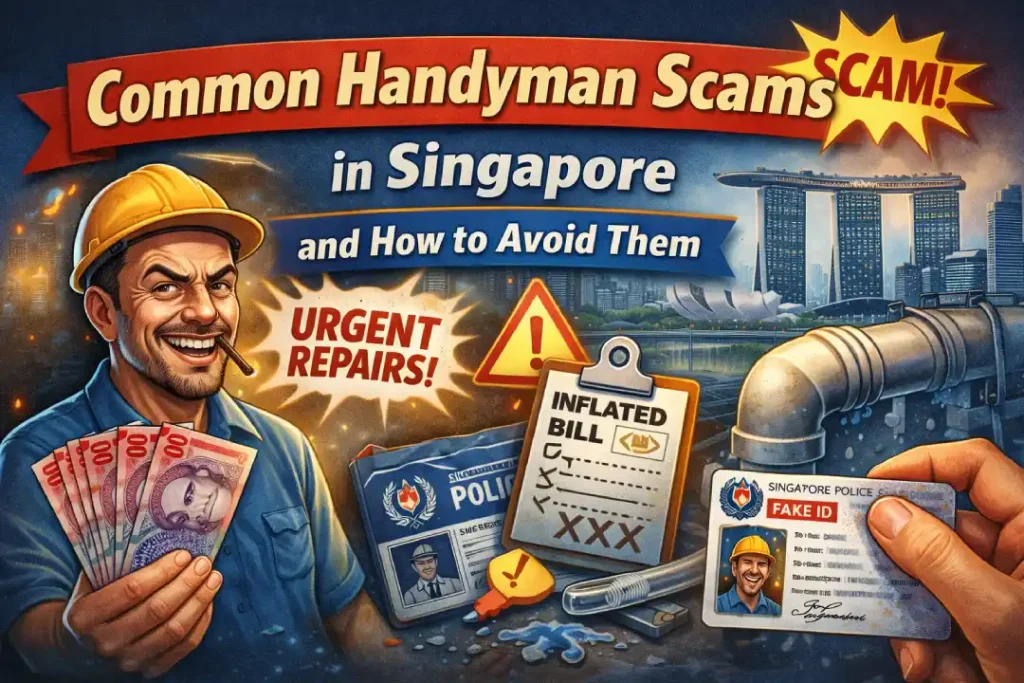
Handyman scams in Singapore are becoming a serious issue for homeowners, tenants, and landlords. Many people contact a handyman expecting a small, affordable repair, only to face sudden price increases, poor workmanship, or a handyman scammer who disappears after payment. These scams happen because repairs are often urgent, and people do not have time to compare prices or check credentials. This guide explains common handyman scams in Singapore in clear terms, shows how these scams work in real situations, and helps you avoid losing money or dealing with unsafe repairs in your home.
Why Handyman Scams Are Common in Singapore
Handyman scams are common in Singapore because many home repairs cannot be delayed. When a water leak, power issue, or door problem occurs, homeowners want quick solutions. Handyman scammers take advantage of this urgency by offering same-day service with low starting prices. Once onsite, they create confusion using technical terms or claim new problems have been discovered.
Another reason is the misunderstanding of what handymen are legally allowed to do. Some tasks require trained professionals like PS Handyman Singapore, yet unqualified handymen still offer these services. Many homeowners also assume small jobs do not need formal checks, which allows handyman services to scam Singapore households more easily. Elderly residents and tenants are especially targeted because they may not be familiar with market rates or repair standards.
The Most Common Handyman Scams in Singapore

Overcharging After Work Begins
Overcharging after work begins is one of the most frequent handyman scams in Singapore. The handyman agrees to a basic price, starts the repair, and later claims that the issue is more serious than expected. Homeowners are told that stopping midway will cause more damage, which pressures them into paying additional fees. These extra charges are often not explained clearly and appear only at the end of the job.
This type of handyman scammer behavior is common in plumbing, electrical repairs, and lock replacement jobs. Homeowners feel forced to pay because the repair is already in progress and the problem still exists.
Low Quote, High Final Bill Scam
Many handyman services scam Singapore residents by advertising extremely low prices online. These prices are designed to attract bookings quickly. Once the handyman arrives, they claim extra parts, tools, or labour are required. The final bill ends up much higher than expected, with no clear breakdown.
This scam works because homeowners rarely know the standard cost of small repairs. By the time the job is finished, refusing payment can lead to arguments or threats to remove installed parts.
| Stage | What Happens |
| Booking | Very low quoted price |
| During work | Extra costs mentioned |
| Payment | High final bill with no explanation |
Fake or Unlicensed Handymen
Fake or unlicensed handymen are a major safety risk. A handyman scammer may claim to be licensed or show copied business details. Without proper training or insurance, mistakes can lead to electrical hazards, water damage, or injuries. In such cases, homeowners are responsible for repair costs and liabilities.
This scam is common in ceiling fan installation, water heater replacement, and power socket work. Always remember that legitimate handymen are transparent about their qualifications and business registration. Faulty wiring is a major fire hazard; for any switch or socket issues, always hire a technician experienced in electrical services to avoid dangerous DIY-level mistakes.
Substandard or Incomplete Work
Some handyman scams involve rushing the job or using low-quality materials to reduce costs. The repair may look acceptable initially but fail shortly after. When homeowners contact the handyman again, messages and calls are ignored. This forces the homeowner to hire another service and pay twice for the same repair.
Substandard work is common in door repairs, cabinet fittings, and plumbing seals. These jobs require proper tools and experience to last. Plumbing problems can disrupt your daily routine quickly, especially in a compact city like Singapore where most people live in HDB flats, condos, or apartments with shared systems.
Unnecessary Repairs Scam
In this scam, the handyman creates fear by claiming that a minor issue is dangerous or urgent. Homeowners are told parts must be replaced immediately to avoid accidents. In reality, the existing parts may still be usable with minor adjustments or repairs.
This handyman services scam Singapore residents by increasing job value without genuine need. A reliable handyman explains the issue clearly and gives options rather than forcing replacements.
Cash-Only and No Invoice Tactics
Cash-only payments and refusal to issue invoices are strong signs of a handyman scammer. Without written proof, homeowners cannot dispute charges or file complaints. These tactics also allow scammers to avoid accountability. Legitimate businesses always provide receipts and clear payment records.
Red Flags That Instantly Signal a Handyman Scam
Several warning signs appear before a scam happens. If a handyman refuses to provide a written quote, pressures you to decide immediately, or demands a large upfront payment, it is safer to stop the job. Lack of business address, unclear pricing, and poor communication are also strong indicators of handyman scams. Taking a few minutes to pause and verify details can prevent costly mistakes.
Choosing a Trusted Local Handyman Service
Many handyman scams happen because homeowners choose based only on price. Choosing the right handyman in Singapore can be daunting. Working with an established service such as PS Handyman Singapore helps reduce risk. A verified service provides clear quotations, proper documentation, trained technicians, and reliable after-service support. This approach prevents repeated repairs and hidden charges that often come with handyman scams.
How Handyman Scammers Manipulate Homeowners
Handyman scammers rely heavily on psychological pressure rather than skill. One common tactic is urgency. The handyman may say the issue is dangerous, could cause flooding, fire risk, or major damage if not fixed immediately. This forces homeowners to make quick decisions without checking prices or getting a second opinion. In many handyman scams, the problem is exaggerated to justify higher charges.
Another manipulation method is technical confusion. The handyman uses complicated terms to make the homeowner feel unsure or unqualified to question the work. This is especially common in electrical and plumbing jobs. Some scammers also rely on authority claims, such as saying they follow “HDB standard” or are “government approved,” even when no such approval exists. These tactics are effective because most homeowners want to feel safe and compliant, which makes them vulnerable to overpaying.
How to Verify a Handyman’s Legitimacy in Singapore
Verifying a handyman before hiring is one of the most effective ways to avoid handyman scams. A legitimate handyman should be able to provide clear business details, pricing information, and proof of past work without hesitation. If these details are unclear or avoided, it is a warning sign.
Checking Business Registration and UEN
A genuine handyman business in Singapore is registered and operates under a valid UEN. Homeowners should ask for the business name and registration details before confirming a job. Scammers often avoid giving this information or provide names that cannot be verified. A registered business is easier to trace, which discourages dishonest behavior and protects the homeowner in case of disputes.
Licensing, Insurance, and Safety Compliance
Many handyman scams involve jobs that should be handled by trained professionals. Electrical work, water heater installation, and ceiling fan wiring require proper knowledge and safety standards. An unlicensed handyman may still offer these services, but mistakes can result in serious hazards. Insurance is equally important. If a worker is injured or causes damage, insurance protects the homeowner from unexpected costs. Complex tasks like ceiling fan installation or water heater replacement require strict adherence to safety standards to prevent electrical shocks or structural accidents
Online Reviews and Reputation Checks
Reviews are helpful but must be read carefully. A handyman scammer may use fake reviews or copy testimonials from other businesses. Look for detailed reviews that describe the job, communication, and pricing clearly. Consistent feedback over time is more reliable than a few short, overly positive comments posted within a short period.
Smart Hiring Practices to Avoid Handyman Fraud
Preventing handyman scams starts with careful hiring. Taking a few extra steps before confirming a job can save money and reduce stress later.
How to Compare Quotes Properly
Always compare quotes based on the scope of work, not just the final price. A proper quote explains what is included, what is excluded, and how changes are handled. Very low prices are often used to attract bookings and later increase costs. Understanding the full scope helps homeowners identify unrealistic offers early.
Why Written Quotes and Clear Scope Matter
Written quotations protect both parties. They reduce misunderstandings and prevent sudden price changes. A clear scope of work ensures the handyman cannot add unnecessary repairs without approval. Handyman scams often succeed because agreements are verbal and unclear.
Payment Best Practices for Home Repairs
Large upfront payments are rarely necessary for small handyman jobs. A reasonable deposit or payment after completion is safer. Avoid cash-only requests, as these reduce accountability. Clear payment terms reduce the risk of disputes and discourage dishonest behavior.
Special Risks for HDB Flats and Rental Properties
HDB flats and rental properties face unique risks when dealing with handyman scams. Some repairs require permission or compliance with housing rules. A handyman scammer may ignore these requirements, leaving homeowners responsible for violations. In rental homes, tenants may unknowingly hire unqualified handymen, leading to disputes with landlords later.
Homeowners and landlords should ensure repairs meet local standards and are documented properly. This protects property value and avoids future issues.
What to Do If You’ve Been Scammed by a Handyman
If you suspect you have fallen victim to a handyman scam, act quickly. Keep all messages, photos, invoices, and payment records. Do not make further payments until the issue is clarified. If damage or safety concerns exist, seek a professional assessment immediately. Reporting the issue helps prevent others from facing similar problems. Even if recovery is not guaranteed, documentation strengthens your position and discourages repeat scams. If you encounter a fraudulent contractor, you can file a formal complaint with CASE to seek mediation or report the business.
Why Professional Handyman Services Reduce Scam Risk
PS handyman services reduce scam risk because they operate transparently. Clear pricing, proper documentation, and trained technicians ensure jobs are done correctly the first time. While the upfront cost may be higher than informal services, it often saves money in the long run by preventing repeated repairs and hidden charges.
Homeowners who choose verified services benefit from accountability, support, and consistent quality, which are rarely offered by handyman scammers.
Frequently Asked Questions
How much should a handyman charge in Singapore?
Handyman charges vary based on job type, materials, and complexity. Extremely low prices often signal a handyman services scam Singapore residents should avoid. Fair pricing reflects labour, tools, and experience.
Is it safe to hire a handyman from social media?
Some legitimate businesses use social media, but many handyman scams start there as well. Always verify business details, request written quotes, and check reviews before confirming.
Do handymen in Singapore need licenses?
Some tasks require trained professionals. Hiring unqualified handymen for such jobs increases safety and legal risks.
How can elderly homeowners avoid handyman scams?
Elderly homeowners should involve family members when hiring, request written quotes, and avoid cash-only payments.
Final Checklist to Avoid Handyman Scams in Singapore
- Verify business registration and contact details
- Request written quotes with clear scope
- Avoid large upfront payments
- Do not rush decisions under pressure
- Keep records of all communication
Final Thoughts
Handyman scams in Singapore affect many homeowners each year, but they are avoidable with the right approach. Understanding how handyman scammers operate, verifying credentials, and choosing trusted services reduces risk significantly. Spending a little extra time checking details before hiring can prevent costly mistakes and unsafe repairs later.