
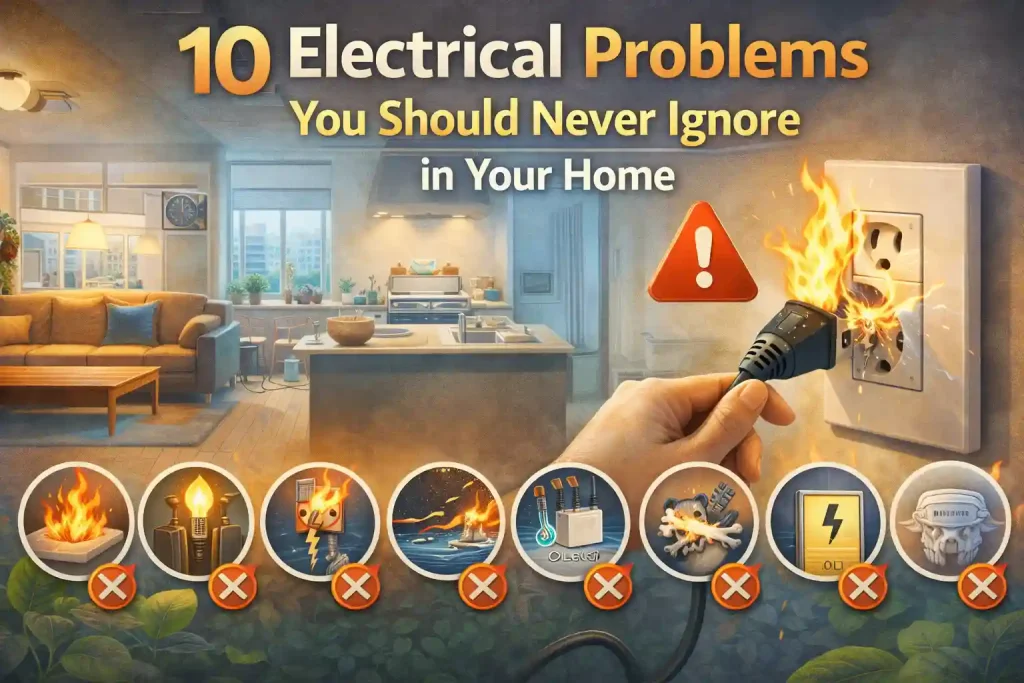
Electrical problems in a home often start quietly. A light flickers for a second, a breaker trips once, or a socket feels slightly warm. Many homeowners in Singapore overlook these signs because everything still “works.” However, electrical systems are not meant to show dramatic failure at the beginning. They give warnings. Ignoring these warnings can result in sudden power loss, damaged appliances, or serious fire hazards. This guide explains the electrical problems you should never ignore, why they happen, and how homeowners can act early to protect their family and property.
Why Ignoring Electrical Problems Is a Serious Risk for Homeowners
Homes in Singapore depend heavily on electricity throughout the day. Air-conditioners, water heaters, washing machines, induction stoves, and charging devices place constant load on electrical circuits. When wiring or outlets begin to fail, the system does not stop immediately. Instead, it overheats slowly. This gradual heat buildup increases the risk of electrical fires, unexpected power trips, and electric shocks. Many homeowners only act after damage occurs, but early attention is the safest and most cost-effective approach. Electrical systems degrade due to age, heat, and moisture. To ensure your home remains safe, it is vital to engage professional electrical services that can identify hidden wear and tear before it becomes a hazard.
How Home Electrical Systems Fail Over Time
Electrical systems degrade due to age, heat, moisture, and usage habits. Over time, wiring insulation becomes brittle, outlet connections loosen, and electrical panels struggle to handle modern appliance loads. Poor-quality installations and DIY electrical work also accelerate failure. When resistance increases in a circuit, heat builds up silently behind walls and sockets. This is why understanding how to prevent electrical issues starts with knowing that most failures develop gradually, not suddenly.
Electrical Problems You Should Never Ignore

1. Flickering or Dimming Lights Under Normal Usage
Lights that flicker or dim without reason often point to loose wiring, overloaded circuits, or poor electrical connections. In many Singapore homes, this happens when high-power appliances such as air-conditioners or microwaves draw current from the same circuit. While the lights may still function, the instability shows that the circuit is under stress. Ignoring this issue increases the risk of overheating wires and damaged fittings, making this one of the most common electrical problems you should never ignore.
2. Circuit Breakers That Trip Repeatedly
Circuit breakers are safety devices designed to cut power when something is wrong. If a breaker trips occasionally, it may be doing its job. However, frequent tripping signals a deeper issue such as overloaded circuits, faulty appliances, or deteriorating wiring. Resetting the breaker repeatedly without fixing the root cause can lead to serious damage. Homeowners often search for how to prevent power trip, but prevention starts with identifying why the circuit is overloaded in the first place.
3. Warm or Discolored Outlets and Switch Plates
Electrical outlets and switches should always remain cool to the touch. When they feel warm or show discoloration, it usually means there is resistance inside the connection. This resistance generates heat and slowly damages the outlet. Over time, the plastic casing may melt, exposing live wires. Many house fires begin this way. Learning how to avoid faulty electrical wiring includes checking outlets regularly and addressing heat issues early. Seeing sparks when plugging in an appliance is never normal. If your wall plugs are discolored or warm, you likely need an immediate power socket and switch installation to replace the damaged components and prevent an electrical fire
4. Burning Smells or Electrical Odors
A burning smell near an outlet, switch, or electrical panel is one of the most serious warning signs. This odor often comes from melting wire insulation or overheated electrical components. The smell may appear briefly and disappear, leading homeowners to ignore it. This is dangerous. Once insulation starts melting, the risk of sparks and fire increases rapidly. In such cases, switching off the main power and contacting a professional service like PS Handyman is the safest decision.
5. Buzzing or Crackling Sounds from Walls or Switches
Electrical systems should operate silently. Buzzing, crackling, or humming sounds indicate loose connections or electrical arcing inside the wiring. These sounds may come from behind walls or within switch boxes, making them easy to overlook. Electrical arcing produces intense heat and can damage insulation quickly. Addressing this issue early helps homeowners prevent more serious faults and reduces long-term repair costs.
6. Sparking Outlets or Switches
Seeing sparks when plugging in an appliance or switching on a light is never normal. While a very small spark may occur once due to static electricity, repeated or visible sparking usually means there is a loose wire, damaged outlet, or moisture inside the socket. In Singapore’s humid climate, moisture can worsen outlet deterioration over time. Sparking creates high heat at the contact point, which can burn internal wiring and increase fire risk. Addressing this issue early is a key step in learning how to prevent electrical issues in the home.
7. Dead Outlets or Switches That Suddenly Stop Working
An outlet or switch that suddenly stops working often points to internal wiring failure, a tripped GFCI outlet, or a damaged circuit connection. Many homeowners assume the outlet is simply “spoiled” and avoid using it, but the real issue may be hidden behind the wall. This can lead to uneven load distribution across circuits, causing other outlets to overheat. Fixing dead outlets promptly helps reduce strain on the overall electrical system and avoids repeated power trips.
8. Frequent Light Bulb Burnouts
Light bulbs should last for months or even years, depending on usage. If bulbs burn out frequently, it may indicate voltage fluctuations, loose fixtures, or overheating sockets. High voltage shortens bulb life and can damage light fittings over time. This problem often appears alongside flickering lights, showing that the electrical supply is unstable. Addressing the cause early prevents further damage and reduces the risk of wiring failure. While the lights may still function, instability shows that the circuit is under stress. Our team provides comprehensive lighting installation and repair to stabilize your home’s lighting and prevent frequent bulb failures.
9. Tingling Sensation or Minor Shocks from Appliances
Feeling a slight tingling or shock when touching appliances is a serious warning sign. This usually happens when grounding is poor or when current leaks from faulty wiring. Even small shocks should never be ignored, as they indicate that electricity is flowing where it should not. Over time, this can lead to stronger shocks and higher electrocution risk. Proper grounding and inspection are essential to prevent injuries and ensure electrical safety in Singapore homes.
10. Old, Outdated, or Damaged Wiring
Many older flats and landed homes still use wiring systems that were not designed for modern electrical loads. Aging insulation, aluminum wiring, or rodent damage can weaken electrical safety significantly. As appliances become more powerful, outdated wiring struggles to cope, leading to overheating and power trips. Upgrading old wiring is one of the most effective ways to improve safety and reduce long-term electrical risks.
What These Electrical Problems Can Lead To If Ignored
Ignoring electrical warning signs often results in more than inconvenience. Overheated wires can ignite surrounding materials, causing house fires that spread quickly. Unstable voltage can damage air-conditioners, televisions, and kitchen appliances, leading to costly replacements. Power outages disrupt daily routines and may affect essential systems such as refrigerators and security devices. Most importantly, faulty electrical systems increase the risk of electric shock and injury. Addressing issues early helps homeowners avoid emergencies and expensive repairs.
An electrical issue becomes an emergency when there is visible smoke, burning smells, repeated breaker trips, or shocks from outlets or appliances. In these situations, switching off the main power supply is the safest first step. Avoid touching affected outlets or wiring until a professional inspection is done. Acting quickly can prevent fire damage and protect everyone in the household.
What a Qualified Electrician Checks During an Electrical Inspection
During an inspection, a qualified electrician examines outlet connections, switch fittings, and the electrical panel for signs of wear or overheating. Wiring insulation is checked for damage, and grounding systems are tested to ensure safe current flow. Load balance and voltage stability are also assessed to confirm that circuits can handle daily usage. This process helps identify hidden problems before they become serious hazards.
How Often Should Home Electrical Systems Be Inspected?
Home electrical systems should be inspected regularly to ensure safety and proper performance. For most homes in Singapore, an inspection every three to five years is recommended. Older flats, landed properties, or homes with outdated wiring should be checked more frequently. Electrical inspections are also important after renovations, major appliance upgrades, or repeated power trips. Routine checks help identify hidden faults early, reducing the risk of sudden electrical failures or fire hazards.
When to Call a Professional Electrical Service
Professional electrical service is necessary when problems do not go away or when multiple warning signs appear together. Frequent power trips, burning smells, warm outlets, or electric shocks should never be ignored. These issues often require proper tools and technical expertise to diagnose safely.
Why Choose PS Handyman Singapore?
PS Handyman Singapore provides reliable electrical services backed by practical experience and local expertise. The team understands common electrical issues in HDB flats, condominiums, and landed homes across Singapore. From minor electrical repairs to full inspections, services are carried out safely and efficiently. Transparent pricing, timely response, and professional workmanship make PS Handyman Singapore a trusted choice for homeowners who value safety and peace of mind.
Preventive Measures to Avoid Electrical Problems Long-Term
Preventing electrical issues starts with proper planning and regular maintenance. Upgrading old electrical panels, balancing circuit loads, and replacing aging wiring greatly reduce safety risks. All works are compliant with the EMA safety standards for residential properties. Using certified electrical fittings and avoiding DIY electrical modifications also help prevent damage. Scheduling routine inspections ensures small problems are corrected early, making it easier to understand electrical mistakes and how to avoid them while maintaining a safe home environment.
Frequently Asked Questions
Are flickering lights dangerous in a home?
Flickering lights can indicate loose wiring, overloaded circuits, or unstable voltage. While the light may still work, the underlying issue can worsen over time. It is best to have the wiring checked to avoid further damage or overheating.
Why does my circuit breaker keep tripping?
Repeated breaker trips usually mean the circuit is overloaded or there is a wiring fault. Resetting the breaker without fixing the cause can increase fire risk. A professional inspection helps identify the exact problem.
Can a hot electrical outlet cause a fire?
Yes, a hot outlet is a common early sign of electrical resistance and overheating. If ignored, it can lead to melted wiring or sparks. Outlets should always remain cool during normal use.
Is it safe to delay electrical repairs if everything still works?
Electrical systems often continue working even when faults exist. Delaying repairs allows problems to worsen quietly. Early repairs are safer and more affordable than emergency fixes.
Do old homes in Singapore need wiring upgrades?
Older homes may have wiring that cannot support modern appliance loads. Upgrading wiring improves safety, reduces power trips, and ensures the electrical system meets current usage needs.
Final Thoughts: Electrical Problems Are Warnings, Not Inconveniences
Electrical issues are clear signals that something needs attention. Ignoring them puts your home, appliances, and family at risk. Acting early improves safety, prevents costly damage, and ensures reliable power every day. For professional electrical inspection, repair, and preventive maintenance in Singapore, trusted PS Handyman assistance is for you.